Is a Mount Fuji Day Tour From Tokyo Worth It?
Book a Mount Fuji day tour only if you want several spread-out stops in one day. If one lake area is enough, the train or highway bus from Shinjuku works—and lets you move the day when clouds roll in.
Quick answer
Decision: Check firstBook a tour only for several spread-out stops; for one lake area, the train or bus on your own is enough.
Answer for: first-time visitor staying in Tokyo. Other situations are covered below.
- Published
- Updated
- Checked
- Next review
Book a Mount Fuji day tour if you want several spread-out stops around the lakes in one day and don’t want to manage buses, transfers, and timing. If one lake area is enough, the reserved-seat Fuji Excursion train or a highway bus from Shinjuku gets you to Kawaguchiko in about two hours, and going on your own lets you move the day if the forecast turns cloudy.
Mount Fuji’s view depends on the weather, on a tour or on your own. So before you choose, look at what each option does on a day the mountain is hidden. Before you pay, also check the meeting point, the return time, whether the road to the 5th Station is open in your season, and what happens if clouds or a road closure change the plan.
This guide is for first-time visitors staying in Tokyo who want to see Mount Fuji in a day. It is not a climbing guide. It does not rank tour companies, and it does not quote tour prices, because listings change. Official transport and road facts were checked on 2026-11-10 and 2026-11-11, and the five tour listings described below on 2026-11-11. Recheck them before you pay.
Quick answer
| Your situation | Better choice | Why |
|---|---|---|
| You want Chureito Pagoda, Oishi Park, and Oshino Hakkai in one day—plus the 5th Station when the road is open | A day tour | These stops are spread out, and a tour handles the connections. From late autumn, snow can stop the road well below the 5th Station |
| One lake area (Lake Kawaguchiko) is enough | Train or highway bus on your own | About two hours from Shinjuku, and local sightseeing buses start at Kawaguchiko Station |
| You want to watch the forecast and choose the day | On your own | You can move the day; check the change and cancellation rules if you book a seat |
| Your real goal is a Hakone hot spring or a ryokan | Neither—plan Hakone on its own | A Fuji + Hakone tour gives Hakone only part of the day; see Tokyo to Hakone: Day Trip or Overnight? |
| It’s your arrival day, or the day before a long transfer | Neither | Most tours run 10 to 11 hours |
When a Mount Fuji day tour is worth booking
A tour earns its place when your list is long and spread out. In the five tour listings TRJ read on 2026-11-11, the common stops were the Mt. Fuji 5th Station, Oishi Park on Lake Kawaguchiko, Arakurayama Sengen Park (with the Chureito Pagoda), and Oshino Hakkai. These are not all on one bus line from Kawaguchiko Station:
- Fujikyu’s three sightseeing bus lines (Red, Green, and Blue) all start and end at Kawaguchiko Station. The Red line covers the north shore of Lake Kawaguchiko, including Oishi Park. Lake Yamanaka is not on these three lines.
- For Arakurayama Sengen Park, Yamanashi’s official tourism site gives a walk of about 10 minutes from Shimoyoshida Station, then 398 steps or a 15- to 20-minute slope.
- For Oshino Hakkai, the same site gives a 15-minute bus ride from a station on the Fujikyu Line, then a 5-minute walk.
Doing all of that on your own in one short autumn or winter day means stacking trains, buses, and walks. A tour is worth it if:
- You want several of these stops in one day, and you know it will be a long day.
- You don’t want to manage buses, transfers, and timing yourself.
- You want a day that still works if the mountain is hidden—several stops that are worth seeing in cloud.
When you can go by yourself
Going on your own is enough if a slower day around Lake Kawaguchiko is what you want. It also lets you decide later. Tours with free cancellation can be dropped up to 24 hours before the start, but on your own you can wait for a closer forecast: Fujiyama Connect takes same-day bus bookings if seats remain. If you book a train or bus seat ahead, check the change and cancellation rules first (below), so that moving the day costs little.
The train. The Fuji Excursion limited express runs from Shinjuku to Kawaguchiko. Fujikyu Railway gives the fastest run as 1 hour 53 minutes and says the train has no unreserved seats. It runs four round trips a day, with one more in some seasons, and tickets go on sale one month before the travel date. JR East says you can buy tickets online through JR-EAST Train Reservation, including from abroad, and pick them up at stations.
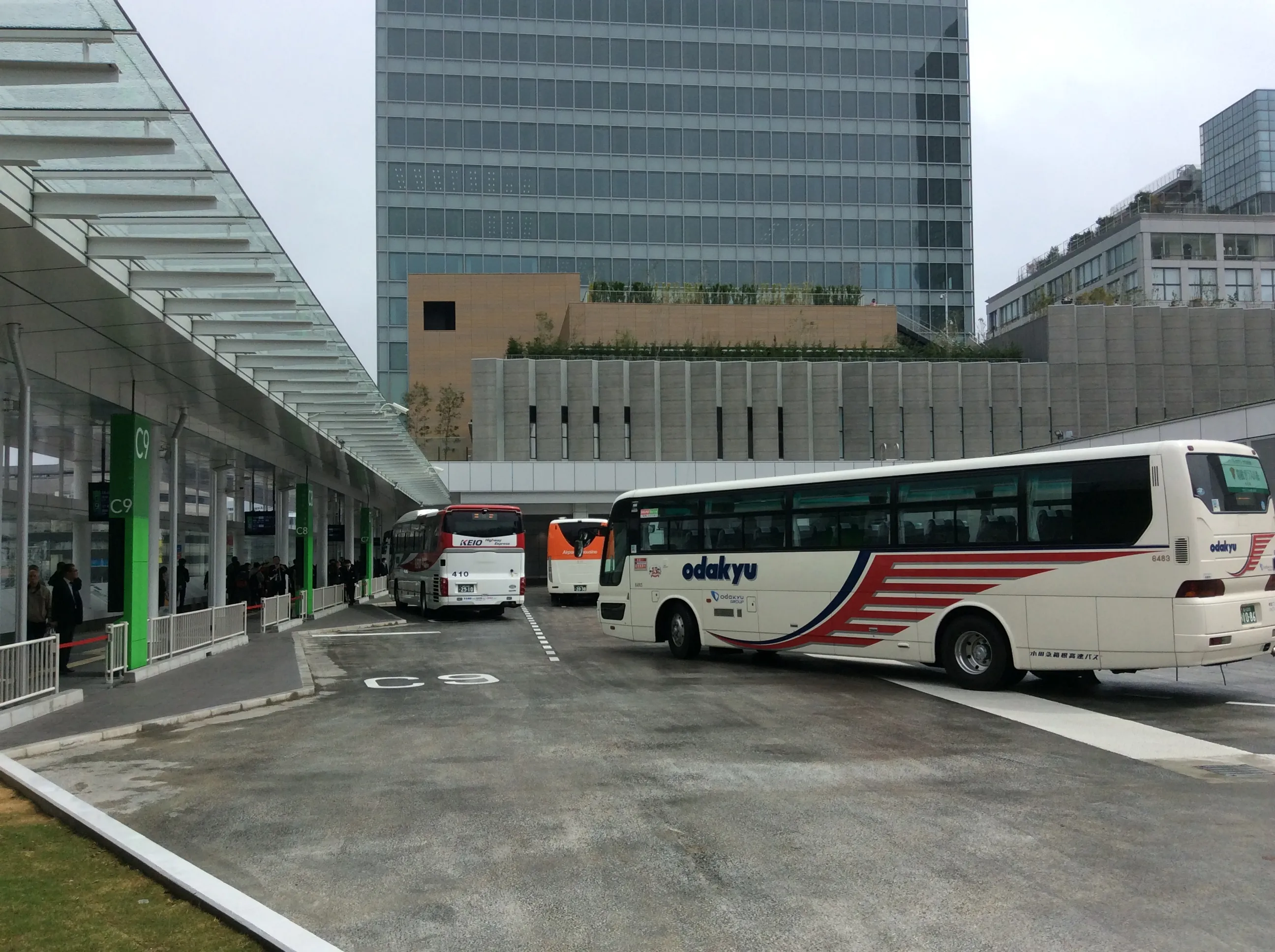
The highway bus. Fujikyu says the bus from Busta Shinjuku to Kawaguchiko Station takes about 1 hour 45 minutes, depending on traffic. Seats are reserved. How to book it is in the next section.
Around the lake. At Kawaguchiko Station, Fujikyu’s Red, Green, and Blue sightseeing buses need no reservation. Fujikyu sells 1-day and 2-day unlimited-ride passes.
On the view. No one can promise a clear day. Yamanashi’s official tourism site says the air is especially clear on early mornings from autumn to early winter, and the Fujikawaguchiko tourism association calls winter the season when the mountain’s outline is sharpest. Neither is a guarantee. If you can, keep a second day free, and go on whichever looks clearer.
How to book the Shinjuku–Kawaguchiko highway bus
These rules come from Fujikyu’s own pages and the booking sites they point to, checked on 2026-11-10 and rechecked on 2026-11-11. TRJ did not make a booking.
- Pick the booking site. For rides from October 1, 2026, Fujikyu-operated buses on this route are booked on Fujikyu’s site, Fujiyama Connect, which has an English menu, takes bookings 24 hours a day, and lets you buy without making an account. Keio’s Highwaybus.com also has an English booking section. The route is run jointly by Fujikyu and Keio, so if one site shows no seats, check the other. Change or cancel on the same site you booked on—Fujikyu says changes can’t be made across sites.
- Book from one month before. Fujikyu’s FAQ says online booking opens at 10:00 a.m., one month before the ride date. Fujiyama Connect says same-day booking is possible.
- Pay when you book. Fujiyama Connect takes VISA, Mastercard, JCB, American Express, and Diners Club (it warns that some overseas cards may not work), and PayPay, Alipay+, and WeChat Pay. A booking that isn’t paid by its deadline is cancelled automatically.
- Show the web ticket on your phone. Fujiyama Connect emails a link to a web ticket. Show the live screen to the crew; a printout also works, but a screenshot does not.
- Board at Busta Shinjuku, 4th floor. Highway buses leave from the 4th floor. GO TOKYO, Tokyo’s official travel site, says the information counter there helps in English.
- Bring one suitcase at most. Fujikyu stores one piece of luggage per person free under the floor, and you can take one piece of hand luggage on board. Luggage can’t be reserved, and Fujikyu warns a bag may not be loaded if the hold is full.
- Know the cancellation rule. Fujikyu’s FAQ gives a handling fee of ¥110 per one-way ticket but says it may differ by route and ticket, and Fujiyama Connect says the cancellation period and fee differ by service. Read the fee shown before you pay. The bus leaves on time, and after departure the ticket is invalid with no refund.
Train seat or bus seat if you may move the day? JR East’s policy page (marked current as of March 2021) allows one free change of a reserved-seat ticket before the train leaves; a refund is possible before departure, less a cancellation charge it does not state as an amount. If you miss your train, JR East says you can take a later train the same day if seats are available. For the bus, it depends on where you booked: Fujiyama Connect lets card payers change the date, bus, or seat, but Highwaybus.com says a paid booking can’t be changed—you cancel (a fee applies) and book again. Neither the train nor the bus refunds after departure.
What most “Mount Fuji” tours actually include
The five listings TRJ read on 2026-11-11 fell into three types. All five ran about 10 to 11 hours, and all offered free cancellation up to 24 hours before the start. A large part of each day is the road: the train or bus alone takes about two hours each way.
| Type | What the day looks like | Watch for |
|---|---|---|
| 5th Station + lakes | The 5th Station plus lake stops such as Oishi Park, Chureito Pagoda, and Oshino Hakkai | From late autumn to spring, snow can close the road to the 5th Station, and the tour stops lower down instead |
| Lakes only | Lake Kawaguchiko, Oshino Hakkai, Oishi Park, Chureito Pagoda, sometimes Lake Yamanaka | No 5th Station, even if the page title or web address mentions it |
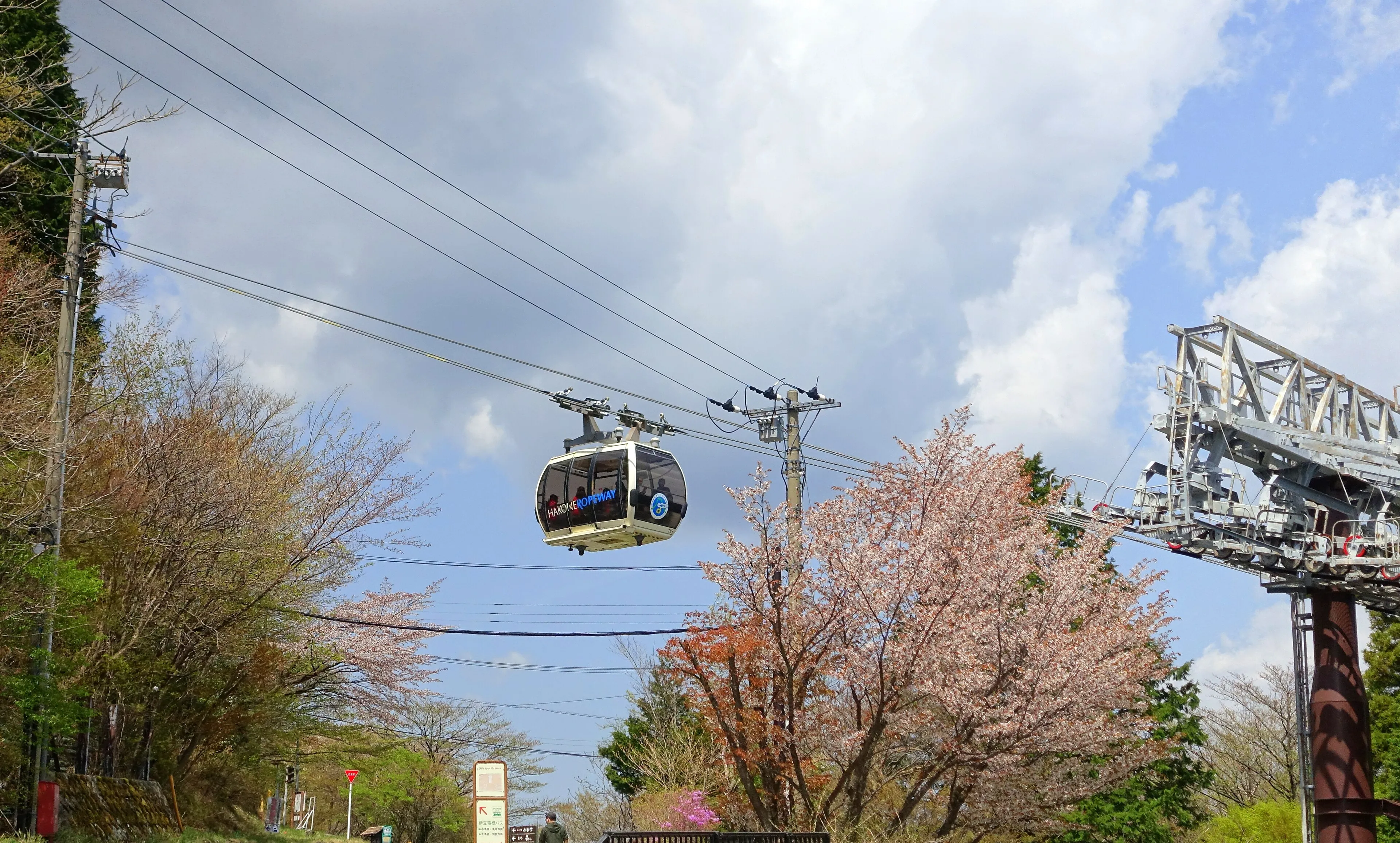
| Mount Fuji + Hakone | The 5th Station, then Owakudani, the Hakone Ropeway, and a Lake Ashi cruise | Hakone gets only part of the day |
About the Fuji + Hakone combination. This type can suit you if Mount Fuji is the goal and you also want a quick look at Hakone. It does not suit you if what you want in Hakone is a hot spring, a ryokan, or a slow day—the combination leaves no time for that. If Hakone is the point, skip the Fuji set and plan Hakone on its own, as a day trip or one night: see Tokyo to Hakone: Day Trip or Overnight?.
Check first: season, meeting point, clouds, and cancellation
- The season and the 5th Station. The Fuji Subaru Line is the road to the 5th Station on the Yamanashi side. Its operator says it can close because of rain, wind, ice, or snow. On 2026-11-11, because of snow, the operator’s status page showed the road open only to the Ichigome-shita parking area (below the 1st Station) in the early morning, and to the 4th Station Osawa parking area from 11:00—not to the 5th Station. Last winter, Yamanashi Prefecture said the last day to the 5th Station was January 18, with full access planned again from April 18, 2026. TRJ did not find a notice for winter 2026–2027. Check the operator’s status page (in Japanese) the day before. The day’s line names how far the road is open: 五合目 is the 5th Station; 四合目 (4th Station) or 一合目下駐車場 means the road stops below it. Then read what your tour does if the road is closed.
- The meeting point and where you finish. Listings met at places such as Shinjuku, Nishi-Shinjuku, or Tokyo Station, and some end somewhere else. Add the trip from your hotel, and check where you will be at night.
- Clouds and closures. Every listing TRJ read said the view depends on the weather. One said there is no refund if the tour runs but the mountain is hidden; another said there are no refunds for weather. Choose a tour whose other stops you would still enjoy.
- The cancellation deadline, in Japan time. The five listings offered free cancellation up to 24 hours before the start. Work out that time in Japan time, not your home time zone.
- Manners at the Chureito Pagoda. Fujiyoshida City cancelled its 2026 cherry blossom festival at Arakurayama Sengen Park because of overtourism, and the city’s tourism guide asks visitors not to enter residential streets or take photos without permission.
- A day tour is not a climb. The official climbing season ran from July 1 (Yamanashi side) or early July (Shizuoka side) to September 10 in 2026, with a ¥4,000 fee per person and each side’s own rules. The official climbing site says climbing outside the season is dangerous.
Your booking decision
Book / Don't book / Check first
Book
- A day tour, if you want several spread-out stops—Chureito Pagoda, Oshino Hakkai, Oishi Park, and the 5th Station when the road is open—in one day.
- A day tour, if you don't want to manage buses, transfers, and timing yourself.
- A day tour with several stops you would enjoy even in cloud, if you want the day to work when Mount Fuji is hidden.
Don't book
- A tour, if one lake area is enough. The Fuji Excursion train or a highway bus from Shinjuku reaches Kawaguchiko in about two hours.
- A tour, if you expect a guaranteed view. Clouds can hide the mountain; read what the tour does on a cloudy day before you pick it.
- A Mount Fuji + Hakone combination, if Hakone is your real goal. Plan Hakone on its own instead.
- Any 10- to 11-hour tour on your arrival day or the day before a long transfer.
Check first
- The meeting point and where the tour ends.
- Whether the 5th Station is open on your date, and what the tour does if the road is closed.
- What the tour does, and whether it refunds anything, if clouds hide the mountain.
- The free-cancellation deadline in Japan time—and, if you go on your own, the change and cancellation rules for your train or bus seat.
- Tokyo to Hakone: Day Trip or Overnight?
- Best Day Tours From Tokyo When You Don't Want to Plan Everything
Based on the official sources listed in this guide and TRJ's own route judgment.
Tour comparison checklist
Before you book any Mount Fuji tour, find these on the listing:
- Total length, and time at each stop. A 10-hour day with two hours of road each way leaves less time at the stops than it seems.
- Lunch. In the listings TRJ read, lunch was often an extra option or at your own cost.
- The 5th Station. Whether the tour goes there, and what it does in the off-season.
- Bad weather. What the listing says about cloud, snow, or a closed road, and whether anything is refunded.
- Where you finish. Tokyo Station, Shinjuku, or a Shinkansen from Odawara can make a big difference to your evening.
For the rest of your trip, What to Book Before Your First Japan Trip shows what needs booking ahead and what can wait. To compare Mount Fuji with Kamakura, Hakone, and Nikko, see Best Day Tours From Tokyo When You Don’t Want to Plan Everything.
Sources checked
Official pages checked on 2026-11-10 (the transport, booking, and road-status pages rechecked on 2026-11-11):
- Fujikyu Railway: Fuji Excursion
- JR East: Azusa, Kaiji and FUJI EXCURSION
- JR East: ticket overview and purchasing guide
- JR East: ticket exchange and refund policy
- Fujikyu Bus: Shinjuku–Kawaguchiko
- Fujikyu Bus: Shinjuku–Kawaguchiko guide
- Fujikyu Bus: FAQ
- Fujikyu Bus: change in reservation method (2026-08-24)
- Fujikyu Bus: Kawaguchiko sightseeing buses
- Fujiyama Connect: how to book (Japanese)
- Fujiyama Connect: payment methods (Japanese)
- Fujiyama Connect: web ticket (Japanese)
- Fujiyama Connect: cancellation (Japanese)
- Fujiyama Connect: changing a booking (Japanese)
- Highwaybus.com: English FAQ
- GO TOKYO: Busta Shinjuku
- Yamanashi Prefecture: Fuji Subaru Line reopening, 2026-04-15 (Japanese)
- Fuji Subaru Line: road information (Japanese)
- Fuji Subaru Line: today’s status (Japanese)
- Yamanashi Prefecture: 2026 Mount Fuji climbing, Yoshida Trail (Japanese)
- Shizuoka Prefecture: 2026 Mount Fuji climbing rules (Japanese)
- Mt. Fuji official climbing site
- Yamanashi official tourism: Arakurayama Sengen Park (Japanese)
- Yamanashi official tourism: Oshino Hakkai (Japanese)
- Fujiyoshida City: 2026 cherry blossom festival decision (Japanese, PDF)
- Fujiyoshida tourism: Arakurayama blossom season (Japanese)
- Fujikawaguchiko tourism association: winter (Japanese)
Tour listings read on 2026-11-11: Viator (VIP Japan Tours lake-area tour; H.I.S. Mt. Fuji and Hakone day trip) and GetYourGuide (GORYO TRAVEL highlights trip; LIMON Tours Kawaguchiko tour; JRT Group day trip).